The 12 Holocausts of 2025
BreakPoint Daily Commentary

Audio By Carbonatix
By John Stonestreet, Crosswalk.com
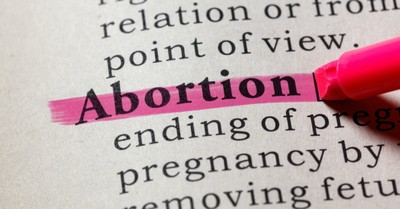
The leading cause of death in 2025 was not heart disease or cancer. In fact, it’s something entirely preventable.
According to the World Health Organization, 73 million humans died at the hands of a greedy abortion industry worldwide. That’s the equivalent of 12 Nazi Holocausts in a single year, more than two victims per second. That’s about 10 million more casualties than cardiovascular disease, cancer, Covid-19, wars in Ukraine and Gaza, and indeed every other cause of human death combined in 2025.
An argument you’ve probably heard before is often used to justify this mass genocide: The preborn are merely a “clump of cells” and therefore don’t have the same right to life. This rhetoric has a long history. In Germany in the 1930s, Hitler and the Third Reich popularized Lebensunwertes Leben, “lives unworthy of life” to justify their mass extermination of Jews, dissenting Christians, and anyone else they deemed. This distinction between lives worth living and lives not worth living is always made, of course, by those who place their own lives in the “worth living” category.
The Tutsis in Rwanda were called Inyenzi, or “cockroaches.” KKK literature reduced blacks in the U.S. to “gorillas.” The two million victims of Khmer Rouge were deemed “microbes” who must be “swept aside” and “smashed.” White supremacists at the Unite the Right rally spoke of the “anti-white vermin.”
It’s not a jump then to call the 73 million victims of abortion mere “clumps of cells” instead of fellow humans to be dignified and protected as lives worth living. It’s a dark page torn from the same dehumanizing playbook.
The dehumanizing clump of cells argument—our generation’s version of Lebensunwertes Leben—has helped justify the elimination of nearly 100% of preborn humans with Down syndrome in Iceland, with up to 90% of those precious image bearers aborted in the U.S., over 160 million tiny female image bearers in Asia, with sex selective abortion rampant in the U.S., along with the termination of one-third of black image bearers in America since Roe v. Wade. Do we take Jesus seriously when he commanded (not suggested) that we care for “the least of these”?
The “clump of cells” rhetoric only works if we practice one of four forms of deadly discrimination. First, size-ism: I have more right to live than a preborn human because I am bigger. But as leading ethicists point out,
. . . the underlying science is clear. At fertilization, a sperm (a male sex cell) unites with an oocyte (a female sex cell), each of them ceases to be, and a new entity is generated….This is why it is correct to say that the developing human embryo is not “a potential human being” (whatever that might mean) but a human being with potential.
The second form of discrimination is space-ism: I have more right to live than a preborn human until they are outside the mother’s womb. However, the only difference between a baby five seconds prior to and a second after birth is space—the location—which is an arbitrary foundation for personhood.
Third is what could be called self-sufficiency-ism: a human has no right to live if he or she cannot yet survive independent of the mother’s body. Yet a premature baby viable in a Los Angeles hospital may not be viable in the Amazon rainforests, given the availability of life-sustaining technologies. The level of technological sophistication in a given society seems to be an indefensible criterion for when human rights apply. And as a Christian perspective, considering a life worthy of life only when it can self-sustain is exactly backwards. The more dependent, the more vulnerable, the more helpless a human being, the more we should do to protect it.
Fourth is sophistication-ism: a human’s rights only kick in when the brain becomes sophisticated enough to experience consciousness states like pain. This confuses harm with the capacity to feel harm. If I am under heavy sedation, I am still harmed if someone cuts my arm off, regardless of whether I am consciously aware of that harm. And so are millions of tiny humans who have their lives snuffed out at the hands of abortionists, millions of which, we must acknowledge, can feel pain.
Society would hopefully zealously oppose saying some lives aren’t worth living because of their skin tone, social status, or sex. Differences in size, space, self-sufficiency, and sophistication should never override a human’s right to exist.
Christians must stand against the dark and deadly logic of Lebensunwerten Lebens, especially right now, where the commitment to the unborn is being tested by political loyalties. Our commitment must be unwavering, uncompromised, and kept as a priority. The fundamental truth that all life is worth living is the bedrock of a healthy and flourishing civilization.
For the full exposé on the 12 Holocausts of 2025, follow the Shed & Beam podcast here.
This Breakpoint was co-authored by Thaddeus Williams.
Related Resource: The Fight for Life: Exposing the Silent Wounds of Abortion, Yet the Hope That Still Remains
In today’s episode, Dr. Bill Lile, OB/GYN, educator, and leading voice in pro-life medicine, joins Dr. Zach to talk about hope, healing, and redemption after abortion. With clinical insight and deep compassion, Dr. Lile speaks directly to those suffering silently under guilt, grief, or regret. He explains the medical and spiritual realities of life in the womb, the hope of forgiveness through Christ, and practical steps toward emotional and spiritual healing. Dr. Lile also addresses common misconceptions, the importance of trauma-informed care, and how the church can walk alongside those longing for restoration without shame or judgment. If you like what you hear, be sure to follow The Built Different Podcast on Apple, Spotify or YouTube so you never miss an episode!
Photo Credit: ©Getty Images/Devonyu
John Stonestreet is President of the Colson Center for Christian Worldview, and radio host of BreakPoint, a daily national radio program providing thought-provoking commentaries on current events and life issues from a biblical worldview. John holds degrees from Trinity Evangelical Divinity School (IL) and Bryan College (TN), and is the co-author of Making Sense of Your World: A Biblical Worldview.
The views expressed in this commentary do not necessarily reflect those of CrosswalkHeadlines.
BreakPoint is a program of the Colson Center for Christian Worldview. BreakPoint commentaries offer incisive content people can't find anywhere else; content that cuts through the fog of relativism and the news cycle with truth and compassion. Founded by Chuck Colson (1931 – 2012) in 1991 as a daily radio broadcast, BreakPoint provides a Christian perspective on today's news and trends. Today, you can get it in written and a variety of audio formats: on the web, the radio, or your favorite podcast app on the go.
